
Industrial power flushing
Cleaner heating systems and pipelines, consistent temperatures and less unplanned downtime.
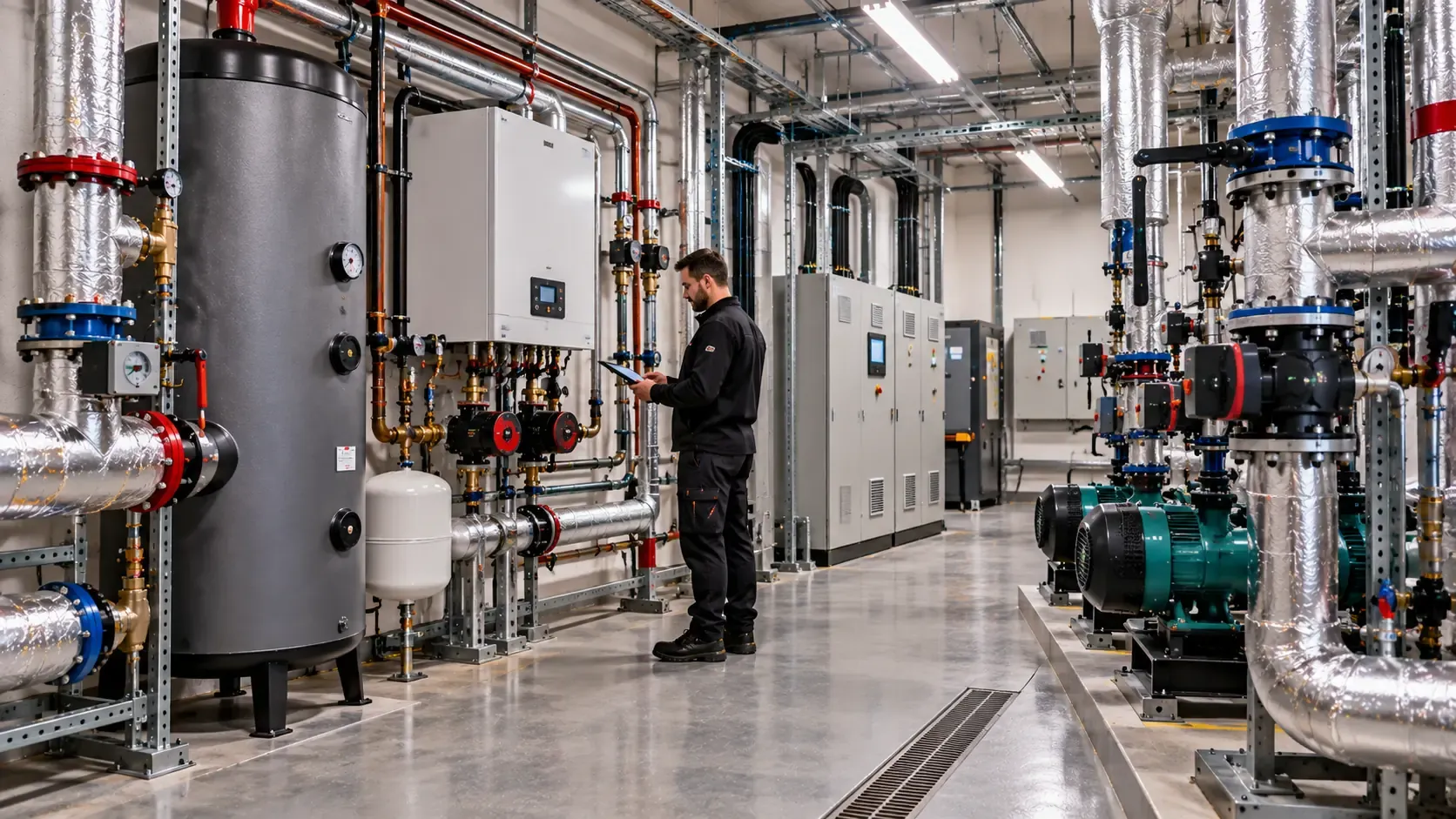
Is your factory's heating system or pipework not performing as it should? TMG Plumbing & Heating Services provides industrial power flushing across Ireland, restoring the efficiency of heating systems, pipelines and fan coil units so you control energy costs and keep production conditions where they need to be.
What an industrial facility needs
Every facility is different: the size of the space, the complexity of the pipe network and the processes involved all shape how the heating needs to perform. Consistent, controlled temperatures matter for staff comfort and, in many cases, for production quality.
Sludge, dirt and limescale build up in radiators, underfloor heating, pipelines and fan coil units, restricting flow and reducing efficiency. Flushing and treating the system removes the build-up, reduces the risk of unexpected downtime and extends the life of the equipment.
Signs your building needs a power flush
- Cold areas on the shop floor or in offices
- Fan coil units or radiators not reaching temperature
- Noisy boilers, pumps or pipework
- Rising energy costs with no change in use
- Frequent pump, valve or boiler failures
- Dirty or discoloured system water
How we power flush a commercial heating system
- 1
Site survey
We look over the heating plant, pumps, pipework, radiators, fan coils and underfloor circuits to see where sludge is gathering, and plan the work around how your building operates.
- 2
Water analysis
We test a sample of the system water for pH and corrosion, and use a magnet to show how much magnetic debris is circulating.
- 3
Bypass filtration
While the system runs, water is taken through a bypass into our specialist filtration unit, removing the sludge and debris that block pumps, valves and pipework. In most cases there is no need to drain down.
- 4
Power flushing
Each section of the system is flushed at high velocity but low pressure, while magnetic filters capture the metal particles that cause future corrosion.
- 5
Demineralisation
The water is passed through a demineralisation unit, removing the minerals that cause scale and reducing the risk of corrosion.
- 6
Refill and protect
The system is topped up with treated water, with reference to VDI 2035 and the manufacturer's water-quality requirements, and a Heating Water Regulator can be fitted to keep it protected long term.
- 7
Final check
We test the water again and check heat distribution, flow rates, boiler performance and radiator recovery times.
Benefits for your building
Frequently asked questions
Do you flush process pipework as well as heating?
We flush heating systems, pipelines and fan coil units. Tell us about your system and we will advise whether flushing and water treatment is suitable.
Can you work while the building is in use?
Yes. Most of the work is done while the system is running, through a bypass into our filtration unit, and we plan around your timetable so occupants are disturbed as little as possible.
Do you need to drain the heating system?
Usually not. Our equipment filters the sludge and debris out while the water circulates, and in most cases no cleaning chemicals are needed. We'll tell you in advance if a heavily blocked section needs a different approach.
Do you work outside the South East?
Yes. We carry out commercial power flushing, demineralisation and water treatment anywhere in Ireland.
How often should a commercial heating system be flushed?
It depends on the system and its water quality. We recommend testing the water every six months; the results show when cleaning or treatment is needed, rather than relying on guesswork.
Download our guides
Free PDFs to read now or keep for later.
Further reading
Request a site survey or quote
Tell us about the site and the system. Only the starred fields are required; the rest help us scope the job.
We use your details only to reply to your enquiry and, if you go ahead, to carry out the work. We won't add you to a mailing list. See our privacy policy.