
Power flushing for office buildings
A comfortable office for your team, and an end to paying for heat you never feel.
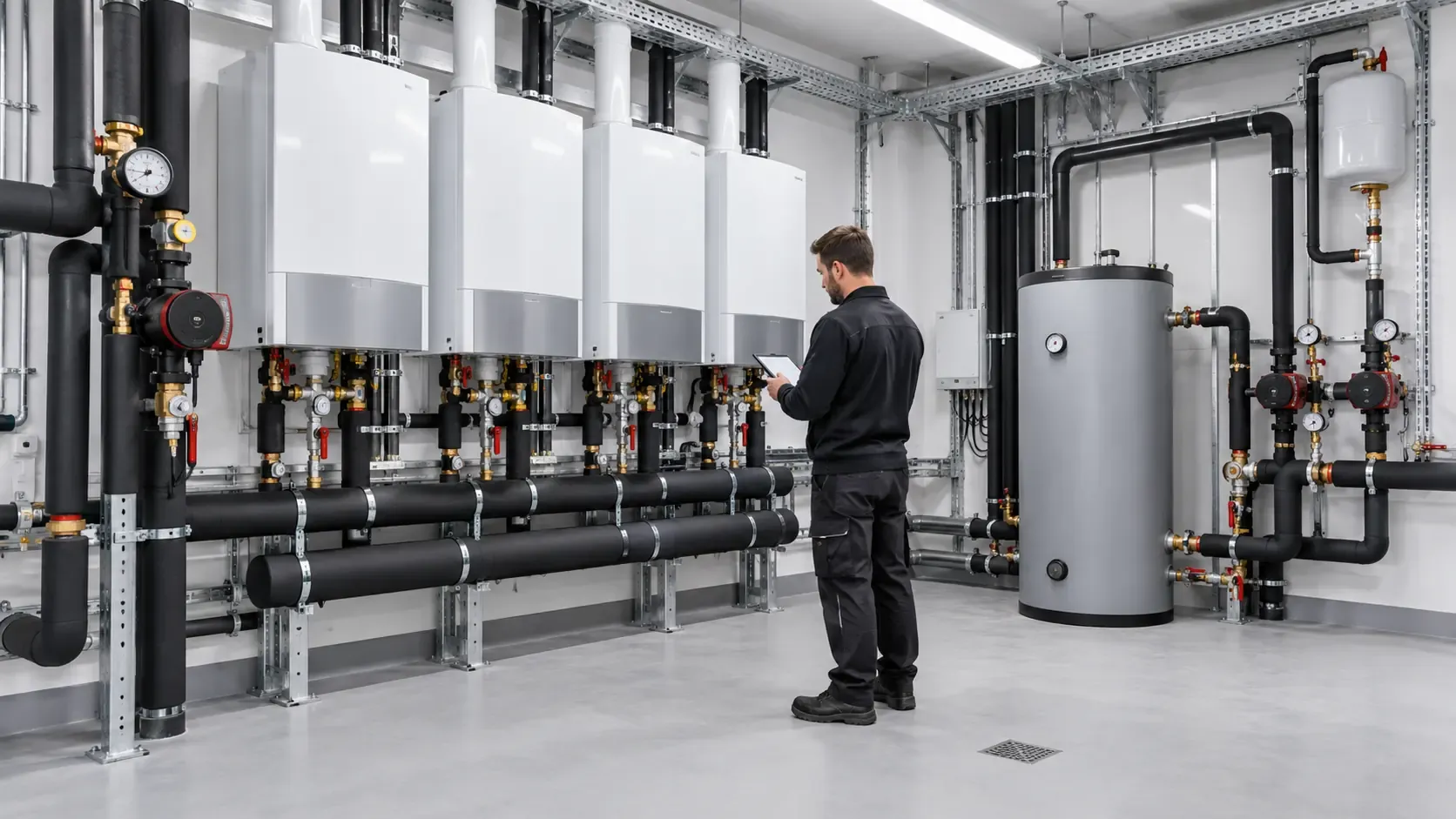
When a meeting room stays chilly or certain radiators refuse to warm up, people notice, and it quickly becomes a distraction. TMG Plumbing & Heating Services provides commercial power flushing for offices across Ireland, clearing the sludge and scale that restrict heat so the whole building stays comfortable.
What an office heating system needs
Open-plan floors, meeting rooms and communal areas all need consistent heat throughout the working day. In a busy office the system is under constant use, and sludge, dirt and limescale gradually make it harder for heat to move around, which is usually why some rooms are freezing while others are fine.
A power flush is a deep clean for the pipework. It clears the trapped build-up so heat flows properly again, and treating the water afterwards keeps it that way. The difference in temperature across the building is noticeable straight away.
Signs your building needs a power flush
- Cold spots, or some rooms warm while others stay cold
- Radiators cold at the bottom but warm at the top
- Banging, rumbling or gurgling from boilers and pipework
- The building takes longer to warm up in the morning
- Rising energy bills, especially through the winter
- Recurring boiler, pump or valve breakdowns
How we power flush a commercial heating system
- 1
Site survey
We look over the heating plant, pumps, pipework, radiators, fan coils and underfloor circuits to see where sludge is gathering, and plan the work around how your building operates.
- 2
Water analysis
We test a sample of the system water for pH and corrosion, and use a magnet to show how much magnetic debris is circulating.
- 3
Bypass filtration
While the system runs, water is taken through a bypass into our specialist filtration unit, removing the sludge and debris that block pumps, valves and pipework. In most cases there is no need to drain down.
- 4
Power flushing
Each section of the system is flushed at high velocity but low pressure, while magnetic filters capture the metal particles that cause future corrosion.
- 5
Demineralisation
The water is passed through a demineralisation unit, removing the minerals that cause scale and reducing the risk of corrosion.
- 6
Refill and protect
The system is topped up with treated water, with reference to VDI 2035 and the manufacturer's water-quality requirements, and a Heating Water Regulator can be fitted to keep it protected long term.
- 7
Final check
We test the water again and check heat distribution, flow rates, boiler performance and radiator recovery times.
Benefits for your building
Frequently asked questions
Can you work outside office hours?
Yes. We can schedule the work early, late or at weekends so your team can keep working as normal.
Can you work while the building is in use?
Yes. Most of the work is done while the system is running, through a bypass into our filtration unit, and we plan around your timetable so occupants are disturbed as little as possible.
Do you need to drain the heating system?
Usually not. Our equipment filters the sludge and debris out while the water circulates, and in most cases no cleaning chemicals are needed. We'll tell you in advance if a heavily blocked section needs a different approach.
Do you work outside the South East?
Yes. We carry out commercial power flushing, demineralisation and water treatment anywhere in Ireland.
How often should a commercial heating system be flushed?
It depends on the system and its water quality. We recommend testing the water every six months; the results show when cleaning or treatment is needed, rather than relying on guesswork.
Download our guides
Free PDFs to read now or keep for later.
Further reading
Request a site survey or quote
Tell us about the site and the system. Only the starred fields are required; the rest help us scope the job.
We use your details only to reply to your enquiry and, if you go ahead, to carry out the work. We won't add you to a mailing list. See our privacy policy.