
Central heating power flushing
We remove the sludge, rust and limescale from radiators, pipework and underfloor heating, so your system heats evenly, quickly and for less.
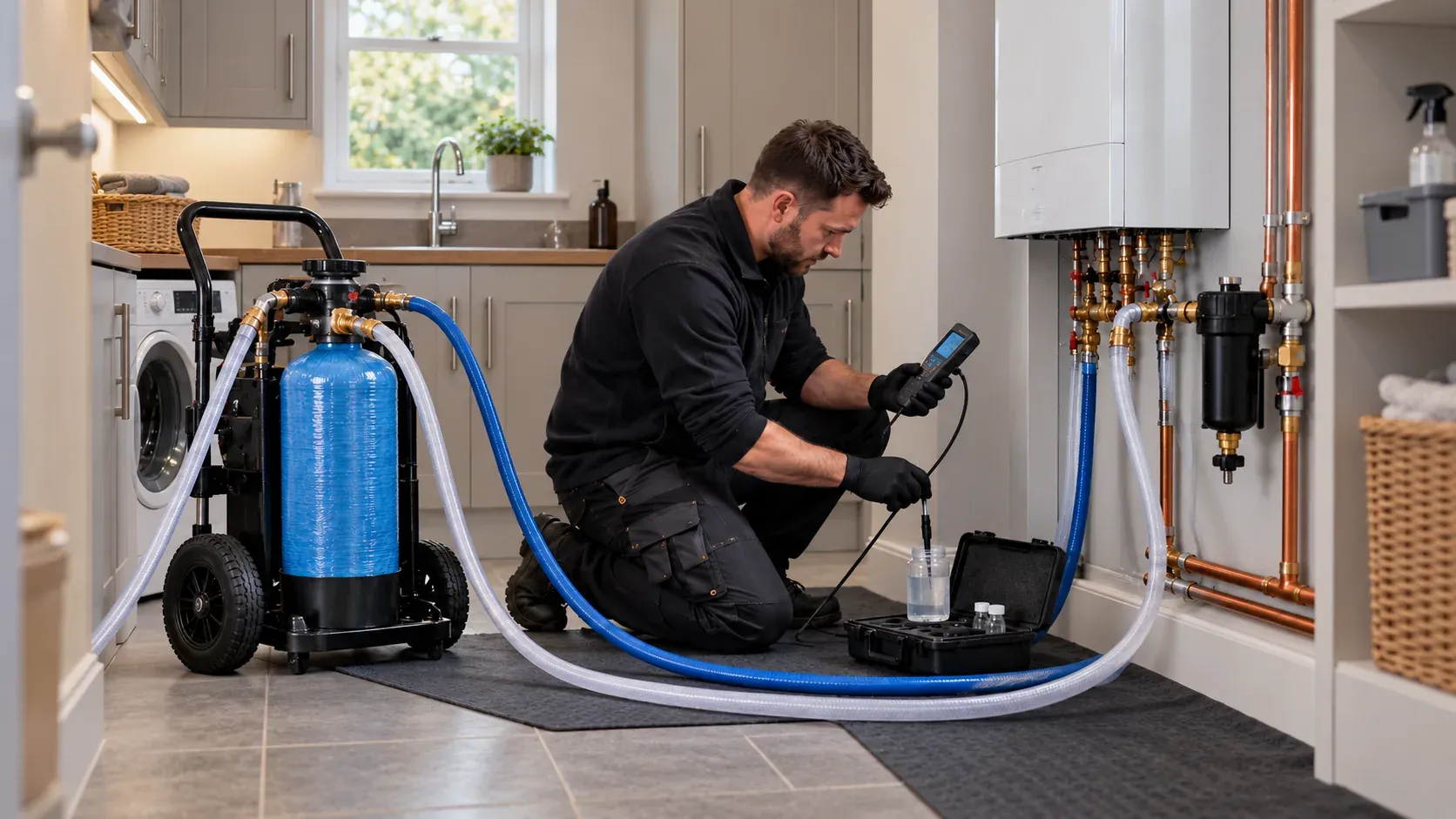
Cold spots on radiators, slow heat-up times and rising energy bills are usually caused by sludge building up inside the heating system. As plumbers and heating contractors based in Waterford, TMG Plumbing & Heating Services has power flushed domestic and commercial heating systems across Waterford and the South East since 2006, restoring even heat and protecting boilers and heat pumps from avoidable wear.
What is a power flush?
A power flush is a deep clean of your entire central heating system. Over time, radiators, pipework and underfloor heating collect sludge (mostly black iron oxide, or magnetite), rust and limescale. These deposits settle where water flow is slowest, typically along the bottom of each radiator, restricting circulation and forcing the boiler and pump to work harder.
Power flushing circulates water through the system at high velocity but low pressure, dislodging the build-up and carrying it out through filters and magnets. It reaches every radiator and pipe run, and because the debris is captured rather than loosened and left behind, the results last.
Signs your heating system needs a power flush
- Radiators cold at the bottom but warm at the top
- Cold spots, or some radiators heating while others stay cold
- The house takes longer to warm up than it used to
- Banging, clanging or gurgling from the boiler or pipes
- Dark, dirty water when you bleed a radiator
- Rising energy bills or repeated boiler breakdowns
How we power flush your heating system
- 1
Initial inspection
We assess the system, check its overall condition and identify any valves, pumps or radiators that need attention before cleaning begins.
- 2
Heating water analysis
We take a sample of the system water and test it for corrosion and pH, giving a clear picture of the system's current condition.
- 3
Filtration
Our flushing unit is connected to the system and filters sludge, metal particles and debris out of the pipework, radiators and underfloor heating. In most cases there is no need to drain the system or use cleaning chemicals.
- 4
High-velocity flushing
Clean water is circulated at high velocity but low pressure, flushing each radiator and circuit thoroughly without putting older pipework under strain.
- 5
Magnetic filtration
Powerful magnetic filters capture the metal oxide particles that cause pinhole leaks in radiators and damage boilers and pumps.
- 6
Demineralisation
The system is topped up where needed and the water passed through a demineralising unit, removing dissolved minerals so the risk of scale and corrosion is reduced and future build-up is slowed. An inhibitor is added where appropriate.
- 7
Final check
We run the system, confirm every radiator heats evenly and check that the boiler or heat pump is operating efficiently before we leave.
Benefits of power flushing
How much does a power flush cost?
There is no single price for a power flush, because no two heating systems are the same. We price every job individually and confirm a fixed price with you before any work begins. These are the main things that affect the cost of power flushing a central heating system:
Number of radiators
The biggest factor. Each radiator is flushed in turn, so a larger system takes longer.
Condition of the system
Heavily sludged or long-neglected systems need more flushing and filtration time.
Type of system
Radiators, underfloor heating or a mix of both, and whether it runs from a boiler or a heat pump.
Pipework and access
Older pipework, seized valves or hard-to-reach radiators can add time to the job.
Water treatment
Demineralisation and inhibitor protect the system once it is clean, and are included in our process.
Commercial systems
Larger buildings are priced after a site survey, based on the plant, circuits and access.
Tell us how many radiators you have and roughly how old the system is, and we'll come back to you with a price.
Get your fixed pricePower flushing vs chemical flushing
A chemical flush relies on cleaning agents added to the system water to loosen deposits, followed by a standard drain-down. It can help a lightly contaminated system, but much of the loosened debris can stay behind and settle again.
A power flush combines high-velocity circulation with filtration and magnets, physically removing sludge and metal particles from every radiator and pipe run. For heavily blocked systems it is the more thorough option, and in most cases we don't need cleaning chemicals at all.
Power flushing underfloor heating
Underfloor heating pipes are narrow and run at lower temperatures, which makes them prone to sludge build-up that leaves cold patches across the floor. We flush each underfloor circuit individually using the same high-velocity, low-pressure method, and can combine it with a full underfloor heating service.
Why choose TMG for power flushing?
- •Qualified plumbers and heating contractors with over 20 years' experience power flushing domestic and commercial systems
- •Professional flushing units with magnetic filtration and demineralising equipment
- •A fixed price agreed before any work begins
- •A clean, low-disruption process, usually finished in a single visit
- •Covering Waterford, Wexford, Kilkenny, Tipperary and Carlow, and commercial sites nationwide
Frequently asked questions
How much does a power flush cost in Ireland?
It depends mainly on the number of radiators and the condition of the system. We give you a fixed price before any work begins. Tell us your radiator count and we'll come back to you with a quote.
How long does a power flush take?
Most homes take between four and eight hours, completed in a single visit. Larger or heavily sludged systems can take longer, and we'll tell you in advance.
How often should a heating system be power flushed?
There is no fixed interval. It depends on the condition of the system, so we recommend a flush when the water test or the symptoms show it's needed, such as cold spots, noisy pipes or a system slow to heat up. Fitting a new boiler or heat pump is also a good time to flush the system.
Will a power flush fix my cold radiators?
If the cause is sludge, it will in most cases. Cold radiators can also be caused by trapped air, a faulty valve or a pump problem, which we check during the initial inspection.
Is power flushing safe for older heating systems?
Yes, when it is carried out professionally. We flush at high velocity but low pressure and inspect the system first. Badly corroded radiators or pipework can occasionally leak once the sludge holding them together is removed, so we'll point out any concerns before we start.
Do you need to drain the system or use chemicals?
Usually not. Our flushing units filter the sludge and debris out while the water circulates, so in most cases the system doesn't need draining and no cleaning chemicals are used. Very heavily blocked systems are the exception, and we'll discuss it with you first.
What is a power flush machine?
A power flushing machine is a pump unit that connects to your heating system and circulates water at high velocity. Ours work alongside magnetic and particle filters and a demineralising unit, so the debris is removed from the system rather than moved around it.
Can you power flush underfloor heating?
Yes. We flush each underfloor heating circuit individually, which clears the sludge that causes cold patches and slow heat-up.
Download our guides
Free PDFs to read now or keep for later.
Further reading
Request a free quote
Fill in your details and we'll get back to you as soon as we can.
We use your details only to reply to your enquiry and, if you go ahead, to carry out the work. We won't add you to a mailing list. See our privacy policy.